The Crowd Needs a Story. Operators Need a Margin.
1) Market Brief — Four data points the crowd will argue about (while we get on with it)
Prices to rise again in 2026 (national +7.7%)
KPMG’s 2026 forecast (as reported) is national house prices +7.7%, with growth across every capital city, despite rate uncertainty.
By-the-numbers (houses): Perth +12.8%, Brisbane +10.9%, Darwin +10.5%, Adelaide +8.2%, Melbourne +6.8%, Sydney +5.8%, Hobart +5.4%, Canberra +4.7%.
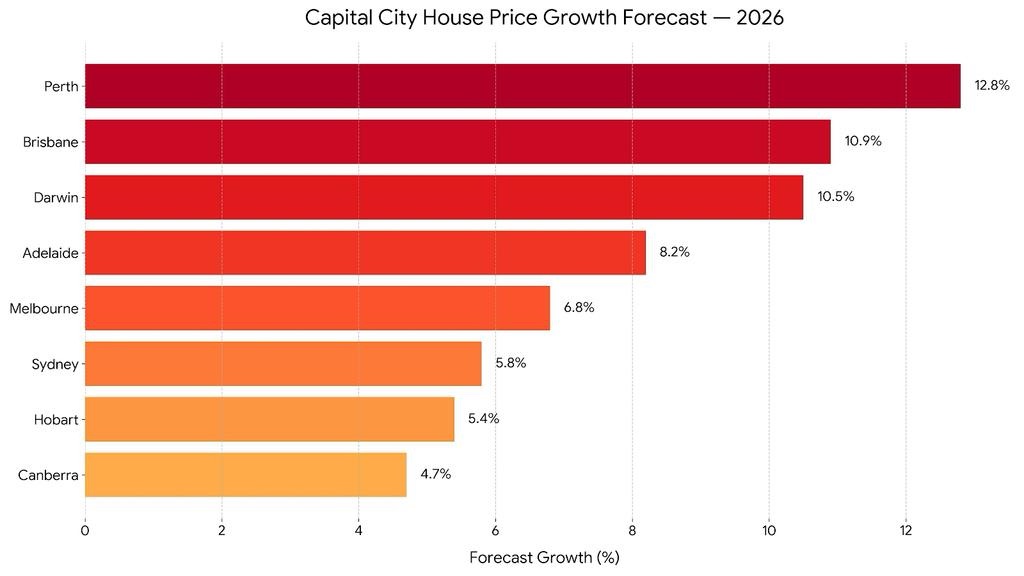
This means: the base case for 2026 is tailwinds, not headwinds. If you can buy at a discount and execute an uplift, you’re not relying on luck — you’re stacking your deal with both manufactured equity + market lift.
The average home is $1,079,000… and belief is still bullish
Cotality’s chart pack puts the average Australian home at $1,079,000.
Markets are pricing two hikes, taking the cash rate to 4.10% and variable rates to about ~6%.
And yet:
87% of property & finance professionals expect prices to rise in 2026
Only 3.5% expect falls
2025 national values were +8.6%, adding about $71,400 to the median home (ascited).
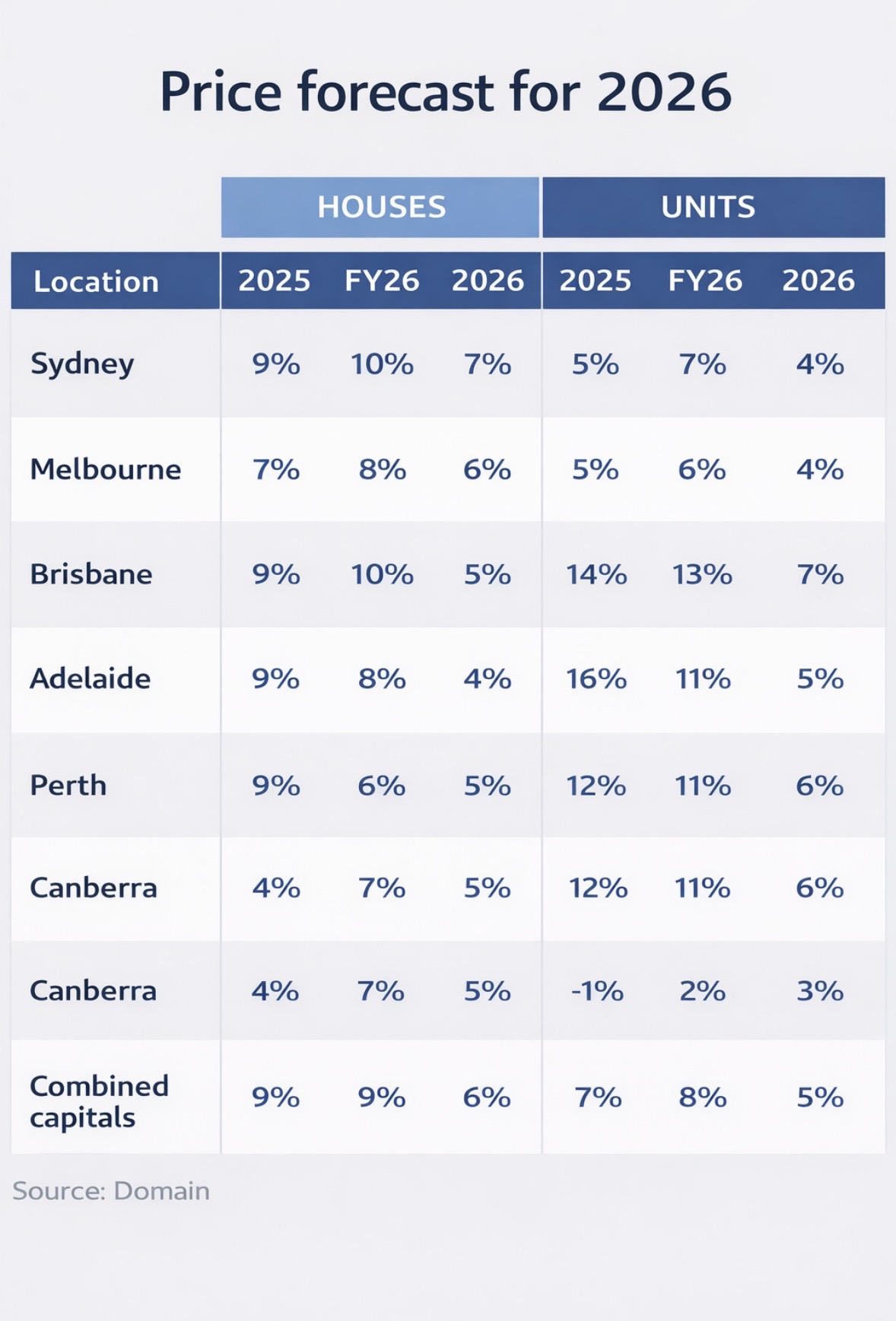
This means: if variable rates drift toward ~6%, weak borrowers fall out first. That can thin out competition — especially on projects that need real work or have complexity. Operators with finance-ready positions and the right loan structure can step into deals others can’t touch.
(See the Renomax play below — built for bigger renos/construction where cashflow and draw schedules decide the outcome.)
Investor lending is rising — but it’s buying existing stock
Macro business has called out a structural change in Australia’s property market:
Mid-1980s: 60%+ of investor mortgages were for construction of new homes
Sep qtr 2025: 83% of new investor loans were to purchase existing properties
Meanwhile completions are “hovering around” ~175,000 p.a., well below the ~240,000 p.a. implied by the government’s 1.2m homes target
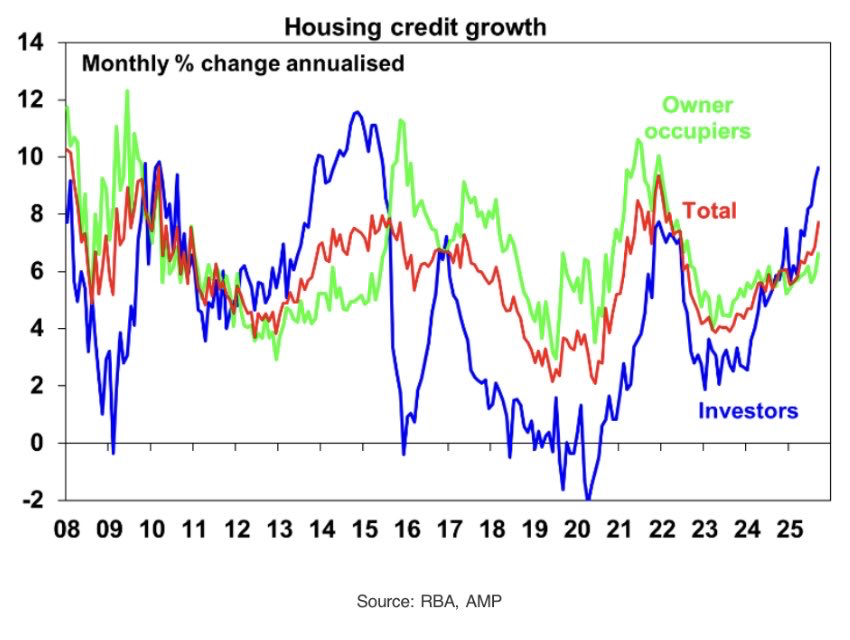
This means: more investor money is chasing the same existing houses — not building new supply. That tends to push prices up and tighten competition, which is exactly why operators win by finding mispriced deals I’m(ugly, overlooked, poorly marketed, time-pressured) and creating value where others can’t or won’t.
Government spending: deficits, demand, and the “rate risk” backdrop
Recent figures show the federal annualised deficit deteriorating from $12b (Dec 2024) → $24b (Jun 2025) → $35b (Nov 2025).
Commentators argue that consolidated deficits could total ~$88b this financial year.
Ai Group says government spending accounted for 90% of economic growth in 2023 and 2024.
OECD analysis ranks Australia second-last among wealthy nations for productivity growth since COVID.

When government spending is doing the heavy lifting, inflation pressure tends to linger — and the RBA is less likely to “rescue” anyone with rapid rate cuts. So operators don’t build deals that need cheaper money to work. We assume rates stay higher for longer, we budget conservatively, and we structure funding so a project still survives if timelines blow out or holding costs rise.
Practical operator rule: if the deal only works in a “perfect world” (fast sale, cheap finance, no delays) — it isn’t a deal.
2) Operator Tool of the Week — Renomax (Construction/Reno Loan Feaso)
Renomax is a loan product built for bigger renovation (think 6 figure) flips — where the funding structure and draw schedule matters.
Indicative settings:
The loan offers up to ~70% of the acquisition value of the subject property (LVR)
Renomax will then additionally fund up to 100% of renovation / construction costs
Important note: This is general information only and not financial advice. These figures are product terms and not a promise or guarantee of approval.
3) Operator Win of the Week — Graham (NSW) saved himself from a “deal that looks fine… until it isn’t”
Graham did what operators do: checked the boring stuff early.
Using Proptix risk overlays plus Sage contract feedback, he picked up two issues that would have turned the deal into a slow-motion headache:
Heritage constraints (inside and out) that made the planned internal modifications far more onerous than expected.
A restrictive covenant on title that blocked the intended outcome regardless of council approval — i.e., even with “approved plans”, the title restriction still bites.
Outcome: he didn’t “learn” after exchange. He saw it before it became expensive.
The Bottom Line
The powers-that-be will keep talking. The crowd will keep guessing. The noise is free. The edge costs effort. We’ll pay the effort.